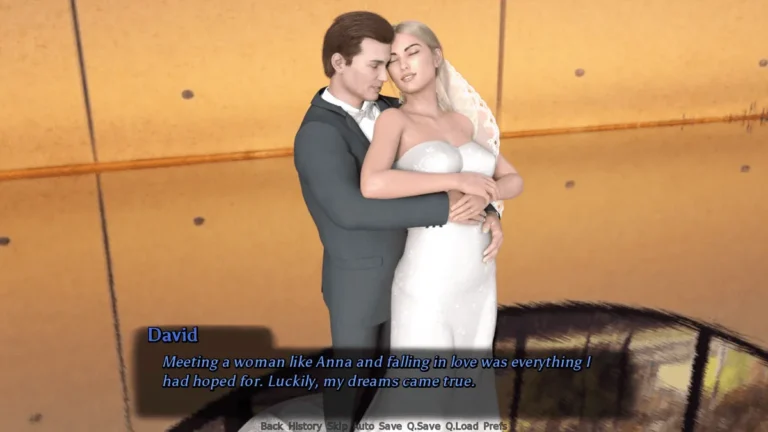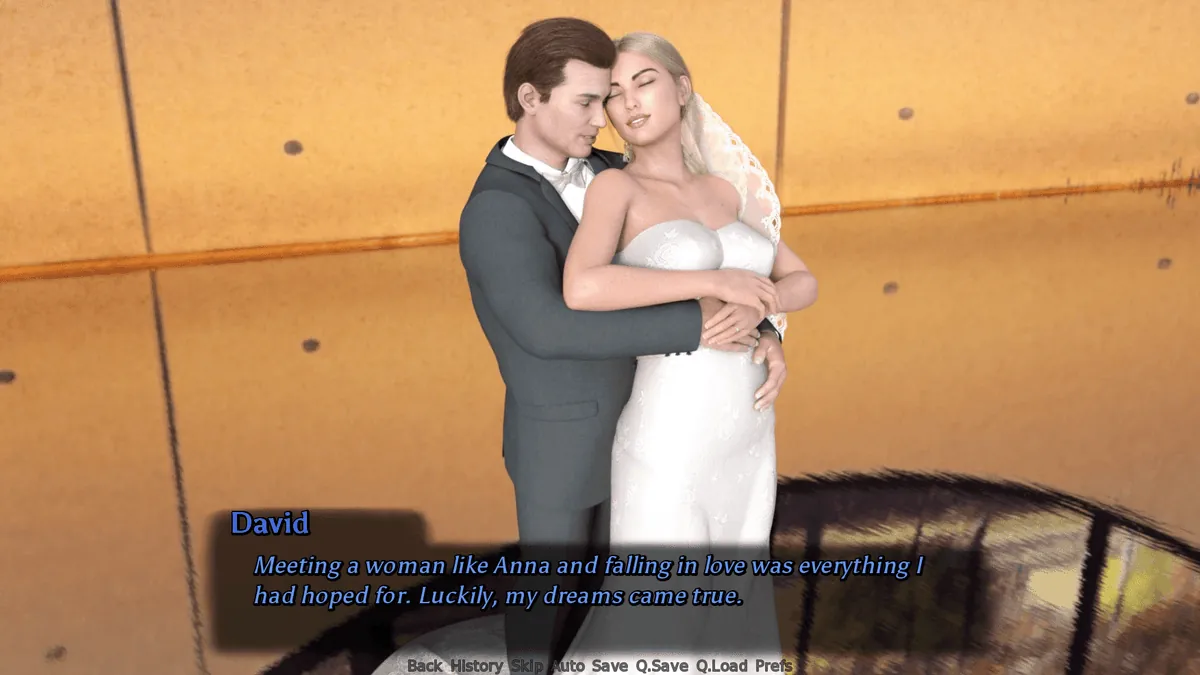
A Perfect Marriage
Play A Perfect Marriage
A Perfect Marriage Screenshots





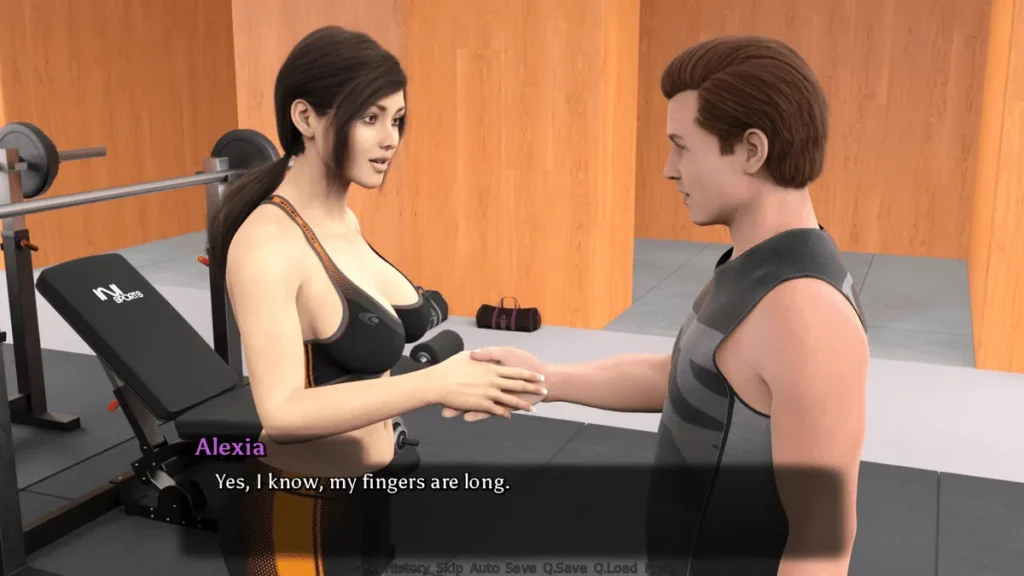
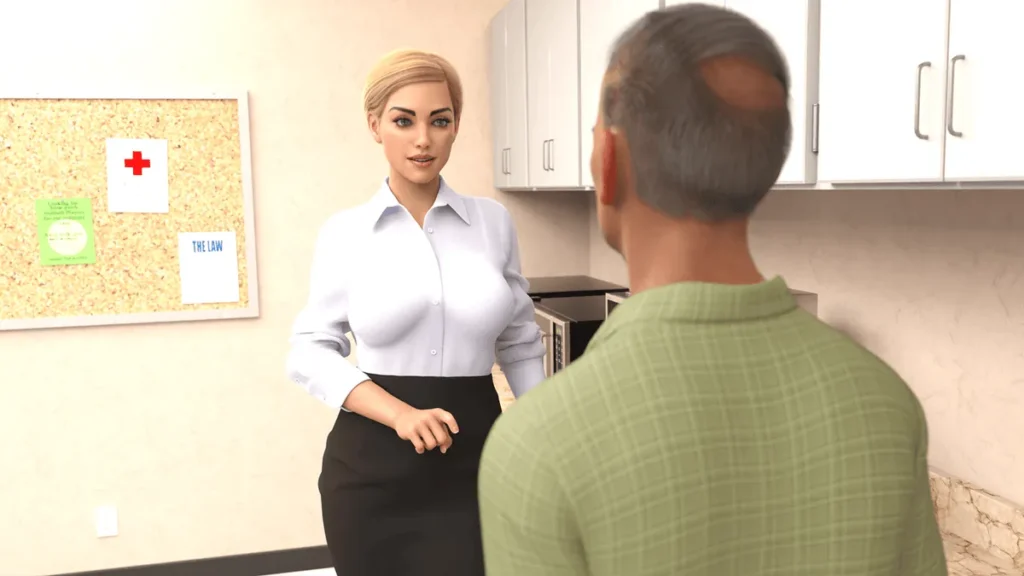

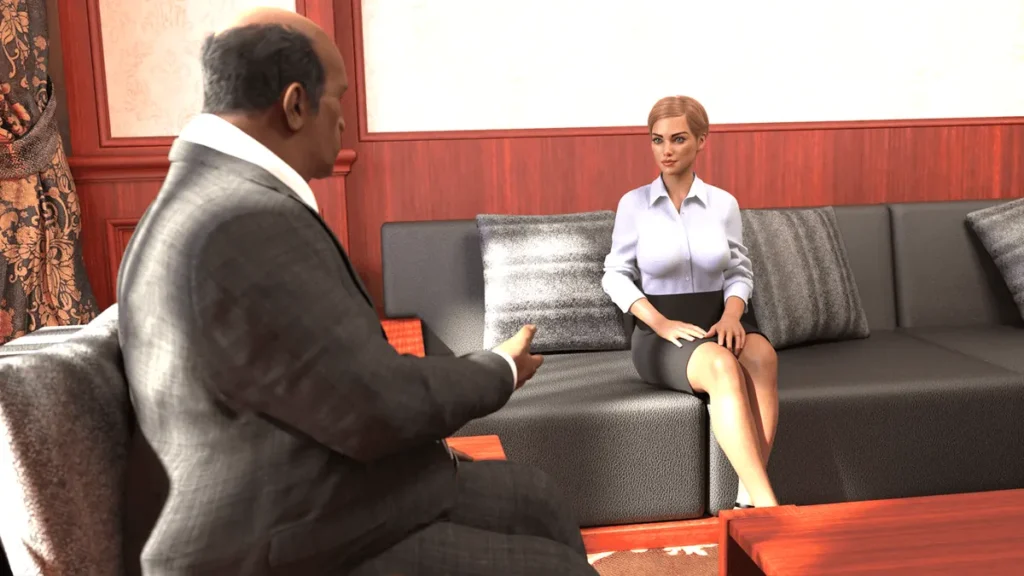


A Perfect Marriage review
Explore branching narratives, dual perspectives, and relationship dynamics in this choice-driven erotic adventure
A Perfect Marriage stands out as a narrative-driven interactive experience that reimagines relationship storytelling through dual-perspective gameplay. Developed by Mr. Palmer, this visual novel invites players into the complex world of Anna and David Parker, a couple navigating intimacy, trust, and temptation across a transformative week. Unlike traditional linear narratives, every decision you make—from how you respond to flirtation to whether you confess hidden secrets—creates ripple effects that shape multiple branching storylines. With over 10 hours of content, animated sequences, and multiple endings ranging from reconciliation to dramatic betrayal, this game offers a psychologically compelling exploration of modern relationships that rewards careful decision-making and multiple playthroughs.
Understanding A Perfect Marriage: Core Gameplay Mechanics and Story Framework
So, you’ve started A Perfect Marriage and maybe you’re wondering what you’ve gotten yourself into. 🫣 One moment you’re Anna, feeling a bit unseen in your own home, and the next you’re David, stressed and trying to keep everything together. This isn’t your typical linear story—it’s a living, breathing relationship simulator where every sigh, side glance, and spoken word holds weight. The genius of this choice-driven narrative game lies in its foundation. To truly master its branching narrative paths, you need to understand the engine under the hood: the seamless dual perspective visual novel mechanics and the intricate system that tracks your every move.
Think of it less as reading a story and more as conducting an orchestra of human emotions. You have the sheet music (the plot), but how you choose to play it—which instruments you emphasize, the tempo you set—creates a completely unique symphony every single time. Let’s pull back the curtain on the core A Perfect Marriage gameplay mechanics that make this possible.
How Dual Perspective Gameplay Transforms the Narrative Experience
Most narrative games give you a single lens to view the world. A Perfect Marriage throws that idea out the window. 🪟 Here, the dual perspective visual novel format isn’t a neat trick; it’s the entire point. You don’t just play as a couple; you play the couple itself, alternating control between Anna and David. This mechanic is the game’s soul, and it fundamentally changes how you perceive every interaction.
The magic happens in the re-contextualization. An event occurs—say, a tense breakfast. You play it as Anna, choosing a line of dialogue that comes from a place of quiet frustration. The scene ends, and perspective flips. Suddenly, you’re David, and you’re privy to his internal monologue. That comment you made as Anna? He might have interpreted it as a biting criticism, not a plea for attention. His private thoughts reveal insecurities and pressures you, as the player, were completely blind to moments before.
This creates a brilliantly complex layer of dramatic irony. You, the player, now possess more information than either individual character. You see the tragic gaps in communication, the small misunderstandings piling up like unpaid bills. It forces you to think on two levels: “What does my character want right now?” and “How will my partner perceive this action, based on the hidden fears I just witnessed in their last scene?”
Personal Insight: On my first playthrough, I thought I was being a great, attentive partner as David. I was working hard, providing! But seeing the world through Anna’s eyes afterward was a gut punch. My “providing” felt like “neglecting” to her. The dual perspective visual novel system doesn’t let you off the hook with good intentions. It demands empathy and strategy.
Let’s walk through a famous example: The Party Scene.
You’re at a neighborhood gathering. A charming neighbor, Alex, starts paying Anna a lot of attention. The game switches to Anna’s perspective.
* What Anna Experiences: Alex is engaging, funny, and makes her feel interesting and attractive—a feeling she’s been missing. You, as Anna, must choose how to respond: politely deflect, engage playfully, or shut it down coldly.
* Immediate Flip to David’s Perspective: Now you’re David across the room. You see this interaction. But you don’t hear Anna’s internal conflict. You just see your wife laughing with another man. Your private thoughts might spiral: “Is she bored with me? Does she find him more exciting?” You must choose David’s reaction: be confidently unbothered, show subtle jealousy, or interrupt the conversation.
The same event, two wildly different emotional landscapes. The choice you make for one character directly sets the stage—and the emotional state—for the other. This is the core interactive story choices impact at a microscopic level, and it’s what makes the A Perfect Marriage gameplay mechanics so profound. You’re not managing one character’s story; you’re managing the fragile space between them.
The Choice-Driven System: How Your Decisions Shape Relationship Outcomes
If the dual perspective is the soul, the choice-driven system is the central nervous system. Every dialogue option, every action, is a brick placed on the path to your unique ending. There are no “right” or “wrong” choices in a traditional sense, only consequential ones. A throwaway comment in Chapter 2 about a burnt dinner can echo in a massive argument in Chapter 6. This is because A Perfect Marriage is a masterclass in branching narrative paths game design.
The game excels at making small moments feel significant. It understands that relationships aren’t destroyed by single catastrophes, but by a thousand tiny paper cuts. Will you help with the dishes without being asked? Do you notice your partner’s new haircut? Do you prioritize work emails over a planned date night? These aren’t just flavor text; they are the primary gameplay.
Crucially, the game rarely signposts the “importance” of a decision. It doesn’t flash “THIS WILL BE IMPORTANT LATER!” on the screen. This mimics real life and makes every playthrough feel authentic and tense. You are constantly wondering, “Did that matter? How did that land?” This uncertainty is a key relationship simulation game feature that builds incredible replay value. With over 10 hours of content in the current version 0.7.1b, the permutations are vast.
To visualize how these ripples become waves, let’s look at some specific decision points. The table below shows how a single moment can branch out, affecting character dynamics and locking or unlocking future story possibilities.
| Decision Point | Possible Choice | Immediate Consequence | Long-Term Narrative Impact |
|---|---|---|---|
| The Breakfast Argument (Early Game) | As David: Criticize Anna’s coffee as too weak. | Anna becomes quiet and withdraws for the scene. Small decrease in visible Affection meter. | This gets logged as a “criticism.” Multiple instances can make Anna more receptive to outside compliments later, potentially increasing her Corruption path availability. It may also trigger a “You’re always criticizing me” argument branch much later. |
| Working Late (Mid Game) | As David: Text Anna you’ll be late, but don’t call. | Anna spends the evening alone, feeling neglected. A brief scene of her watching TV solo. | Feeds into the “Loneliness” tracker for Anna. High Loneliness makes story branches where she seeks external companionship (like with Alex) more likely to trigger and feel narratively justified. |
| Flirtatious Encounter (The Party) | As Anna: Playfully flirt back with Alex. | David notices from across the room. His Jealousy variable increases. | Unlocks potential future “confrontation” scenes with David. If David’s Jealousy is high enough, it may lead to possessive behavior branches or, conversely, a branch where he doubles down on self-improvement to win you back. |
| Offered a Drink (At the Bar) | As Anna: Firmly decline the advance. | Scene ends quickly. Alex is respectfully rebuffed. | Reinforces the “Loyal” path. May unlock more intimate, trusting scenes with David later, as the game recognizes a conscious choice to prioritize the marriage. Can lead to “rekindling” narrative branches. |
This table illustrates the beautiful cause-and-effect chain at the heart of this choice-driven narrative game. The game is providing the canvas and the tools—your choices are the brushstrokes that create the final painting.
Character Tracking Variables and Their Impact on Story Branches
Now, where does the game “remember” all these choices? 🧠 This is where the invisible math of A Perfect Marriage comes in. Running silently beneath the story are four primary tracking variables: Corruption, Loyalty, Jealousy, and Affection. Think of them not as simple “good vs. bad” meters, but as indicators of the relationship’s emotional climate. They are the ultimate answer to “how do game choices affect endings.”
These variables are fluid, often influencing each other. Raising one might lower another. They determine which doors in the story open for you and which remain firmly locked.
- Corruption: This tracks the temptation outside the marriage. For Anna, it measures her openness to external attention and excitement. For David, it can represent his descent into controlling behavior or his own straying thoughts. A high Corruption score doesn’t make you a villain; it opens narrative paths about exploration, selfish desire, and breaking boundaries. It might lead to thrilling, passionate endings that are nonetheless fraught with instability.
- Loyalty: The counterweight to Corruption. This variable measures commitment to the marriage vows and the partner. Choosing to communicate, to prioritize your spouse, to fight for the relationship instead of in it, boosts Loyalty. High Loyalty paths are about rebuilding, deep understanding, and forgiveness. They lead to endings that are perhaps less explosively dramatic but are built on a reforged, stronger foundation.
- Jealousy: A potent and dangerous variable. It can spike quickly from a single event (like the party scene). High Jealousy can trigger possessive story branches, arguments fueled by insecurity, and controlling actions. However, in smaller doses, it can also be a catalyst for positive change—a wake-up call that makes a character realize what they might lose.
- Affection: The baseline warmth and love in the relationship. This is built through small, consistent acts of kindness, intimacy, and support. While other variables might swing wildly, Affection is the slow-burn meter. A high Affection score can act as a buffer, making characters more forgiving when Jealousy spikes or Corruption tempts. It’s often the key to unlocking the most stable and mutually satisfying endings, regardless of the path taken.
How They Work Together: A Case Study
Imagine you, as Anna, have a medium-high Corruption score from several playful flirtations. Your Loyalty is middling. Then, at a key moment, you’re presented with an opportunity for a secret rendezvous.
- If your Corruption is the dominant variable, the game might present this as a thrilling, “can’t-miss” chance, and the story will continue down a path of secret affairs and escalating risks.
- If your Loyalty, while lower, is still significant, the game might instead present the same opportunity but fill Anna’s internal monologue with guilt and hesitation. You might still choose the rendezvous, but the tone of the subsequent scenes will be different—more tragic and conflicted.
- If your Affection for David is surprisingly high, the option to go to the rendezvous might not even appear! The game recognizes that your Anna, despite her temptations, ultimately loves her husband too much to take that particular step, and it will offer you different narrative choices instead.
This is the brilliance of the system. You are not just picking from a list of pre-written branches. You are, through hundreds of micro-decisions, defining the character’s primary driving force. The game then uses that definition to tailor which major branching narrative paths become available and feel emotionally true.
Mastering A Perfect Marriage means understanding that you are always speaking to two audiences: the character you’re currently playing and the hidden variable spreadsheet that will judge the health of your relationship. It’s a relationship simulation game that asks tough questions about desire, commitment, and communication. By leveraging the unparalleled insight of the dual perspective and respecting the profound interactive story choices impact, you move from being a passive reader to an active architect of a marriage. Your choices don’t just affect the ending; they define the very nature of the relationship that is seeking one. The game, in its current substantial version, gives you all the tools. What you build with them—a palace of trust, a ruin of betrayal, or something painfully, beautifully in-between—is entirely up to you. 🏠💔❤️🔥
A Perfect Marriage redefines what interactive storytelling can achieve by placing genuine agency at the center of the experience. The dual perspective system transforms relationship dynamics from a single viewpoint into a nuanced exploration of how the same events feel entirely different depending on which partner you’re inhabiting. Every decision—from how you handle temptation to whether you prioritize honesty or self-protection—carries weight and consequence, creating a narrative that feels personal and earned rather than predetermined. With multiple endings, hidden scenes, and over 10 hours of branching content, the game rewards players who engage thoughtfully with its mechanics and characters. Whether you’re drawn to stories about reconciliation, exploring darker desires, or navigating polyamorous relationships, A Perfect Marriage provides the framework and tools for you to author your own relationship narrative. For players seeking narrative-driven experiences that treat mature themes with psychological depth and respect player choice, this visual novel stands as a compelling exploration of modern intimacy and the fragile balance between desire, trust, and commitment.