
Karryn’s Prison Screenshots









Karryn’s Prison review
Exploring the innovative corruption system and storytelling in this indie title
Karryn’s Prison stands out as a uniquely designed indie game that seamlessly integrates narrative progression with interactive mechanics. The game presents a compelling story of character transformation where player choices directly influence the protagonist’s journey. What makes this title particularly noteworthy is how its core systems reinforce thematic elements, creating an experience where gameplay and storytelling become inseparable. Whether you’re interested in indie game design, narrative-driven experiences, or innovative mechanical systems, understanding what makes Karryn’s Prison distinctive offers valuable insights into modern game development.
Innovative Mechanics & Narrative Integration
Ever played a game where your choices actually mattered? Not just picking a dialogue option that slightly alters the next line, but decisions that fundamentally reshape your character’s abilities, the world’s reaction to you, and the very story you’re living? If you’ve felt that itch for true consequence, then understanding how does Karryn’s Prison work is your next great adventure. This isn’t just another indie title; it’s a masterclass in fusing what you do with who you become.
At its heart, Karryn’s Prison mechanics are a fascinating puzzle. You play as Karryn, the stern and disciplined warden of a prison filled with unruly male inmates. Your job is to manage the facility, rehabilitate prisoners, and maintain order. But here’s the twist: every interaction, every failed check, every moment of weakness doesn’t just result in a “Game Over” screen. Instead, it feeds into a transformative loop—the legendary corruption system game design. This system blurs the line between failure and progression, between punishment and power, creating a uniquely personal journey for every player. Let’s break down why this approach is changing the game for narrative-driven indie games.
How Choice-Driven Mechanics Shape Character Development
In most games, character development is a one-way street. You earn XP, you level up, you get stronger. Your moral choices might change a ending slide, but they rarely change your core toolkit. Karryn’s Prison throws that manual out the window. Here, your character progression systems are a direct mirror of your narrative choices.
Think of it this way: every time Karryn faces a challenging situation—whether it’s resisting an inmate’s advance or losing a physical confrontation—the outcome directly alters her stats and abilities. Choosing to resist might boost her “Willpower” stat, fortifying her against future temptations. Conversely, succumbing or being overwhelmed introduces “Corruption,” which unlocks an entirely different, often more potent, set of skills focused on submission, seduction, and control from a position of perceived weakness. Your build is your story.
“I went in thinking I’d be the perfect, unshakeable warden. One bad dice roll later, and I was exploring combat mechanics I didn’t even know existed. It felt less like failing and more like discovering a hidden, darker path the game was eager to show me.” – A player’s experience.
This is the genius of its player choice mechanics. There is no “right” way to play. A “pure” run focused on total discipline is a valid, challenging path. A “corrupted” run where you embrace new powers is equally valid and narratively rich. The game doesn’t judge you; it adapts to you. This creates an incredibly reactive form of indie game storytelling where the plot isn’t just something you watch, but something you physically embody through your character’s evolving capabilities.
The Corruption System: A Masterclass in Game Design
So, let’s get into the nitty-gritty. What exactly is this system, and why is its corruption system game design so praised? It’s a multi-layered feedback loop that connects narrative, stats, and gameplay seamlessly.
Corruption is a resource, a stat, and a story state all at once. It accumulates through specific in-game events and choices. But unlike a simple “evil meter,” it has tangible, immediate effects on Karryn’s Prison mechanics:
- New Abilities & Skills: As corruption rises, Karryn loses access to her standard “Warden” skills and gains access to a darker, more provocative skill tree. These aren’t just reskins; they offer new strategic ways to manage battles and interactions.
- Altered Interactions: NPCs, from inmates to other staff, will react to Karryn’s changing demeanor. A corrupted Karryn might find certain characters more compliant, or others more disdainful, opening and closing narrative branches.
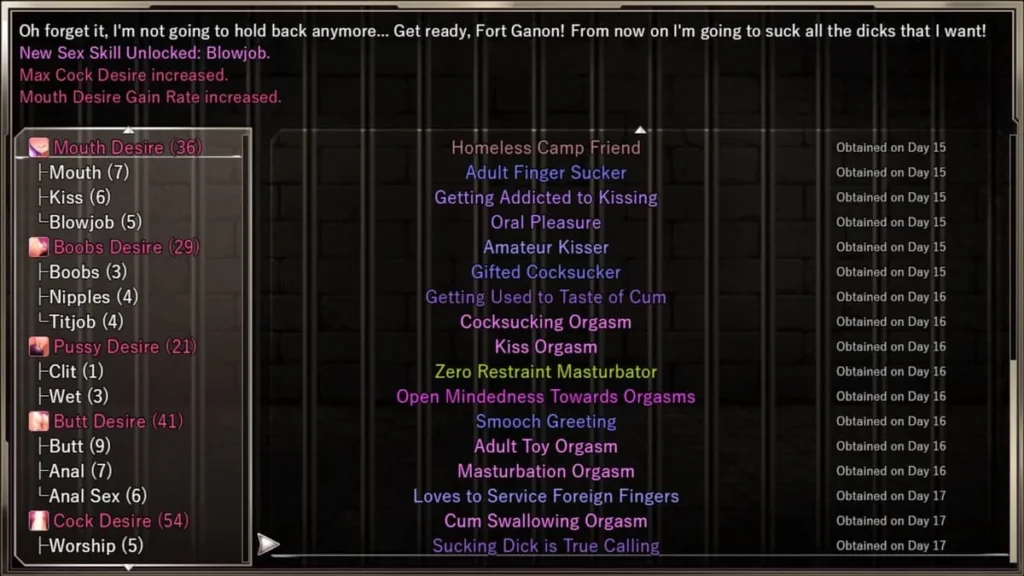
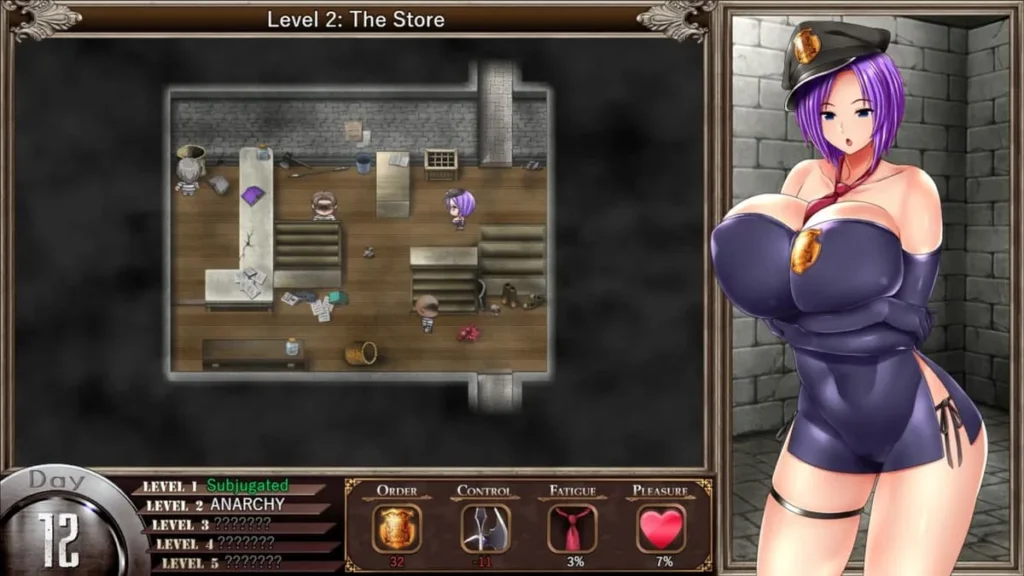
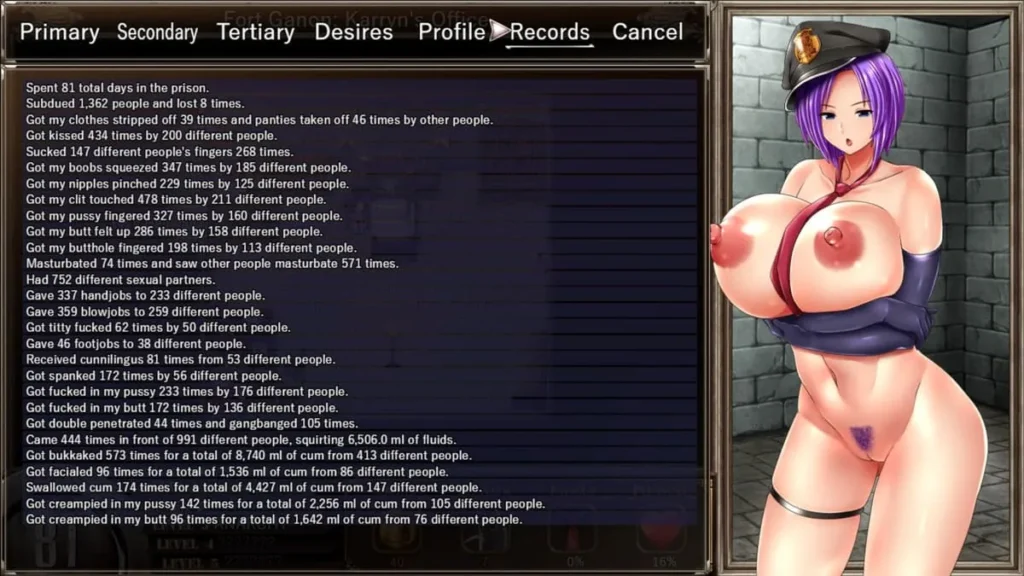
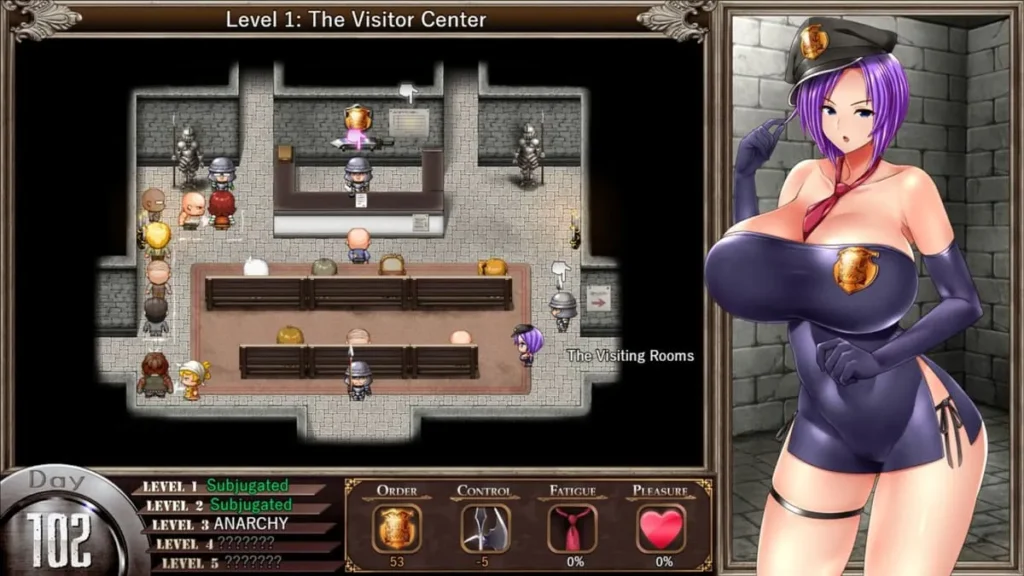
- Visual & Audio Feedback: Karryn’s appearance, animations, and even the game’s UI subtly shift to reflect her state. The transformation is felt, not just read on a stat sheet.
This system answers a profound question in game design: what if failure was just another form of progression? Traditional design often walls off content behind success. Karryn’s Prison says, “No, come see this content too, but you’ll have to live with the consequences.” It turns every moment of vulnerability into a meaningful crossroad.
Here’s a simple breakdown of how key mechanics interact with the Corruption system:
| Player Action / Event | Traditional Game Outcome | Karryn’s Prison Outcome |
|---|---|---|
| Losing a combat encounter | Reload a save, try again. | Gain Corruption, unlocking new dialogue options and abilities for future encounters. |
| Choosing a “submissive” dialogue option | Might lead to a game over or a minor story branch. | Increases Corruption, altering character relationships and opening up the “Submission” skill tree. |
| Managing prison facilities | Purely a resource-management mini-game. | Facility events can trigger Corruption opportunities, tying the “management sim” layer directly to the core character arc. |
This elegant design ensures that the corruption system game design is never a separate mini-game. It is the game. It’s the lens through which all other Karryn’s Prison mechanics are viewed and experienced. Whether you’re in a tactical RPG battle or making a choice in a visual novel-style segment, the potential for transformation is always present.
Why Player Agency Matters in Story-Driven Games
This brings us to the heart of why this game resonates so deeply: player agency. In many story-heavy games, agency is an illusion—you’re on a narrative railroad with occasional scenic detours. Karryn’s Prison hands you the controls and says, “The track is wherever you decide to go.” This is a hallmark of modern narrative-driven indie games that trust their audience with complex, morally ambiguous storytelling.
The satisfaction comes from seeing your decisions ripple through every aspect of the experience. When you choose to embrace a corrupted ability to win a tough fight, you’re not just selecting a skill from a menu. You’re making a narrative choice that says, “Karryn is willing to use these new, shameful powers to maintain control.” The game then reflects that back at you through altered scenes, dialogue, and character reactions. The player choice mechanics and the indie game storytelling are the same thing.
This character progression systems philosophy creates what I call “meaningful friction.” Every choice has weight because it costs something—your purity, your power, your identity. Do you stubbornly stick to your original skills for a tougher but more “virtuous” playthrough? Or do you adapt, using every tool at your disposal, even if it changes who Karryn is? There’s no meta-game “best build,” only the build that tells the story you want to experience.
“We wanted players to feel like they were writing their own version of Karryn’s story, not just playing through ours. The mechanics had to be the pen they wrote with.” – A sentiment echoed from developer discussions.
This level of integration reveals a crucial truth about modern indie development: innovation happens where systems collide. By refusing to compartmentalize “gameplay” and “story,” Karryn’s Prison creates a cohesive, immersive world that feels alive and responsive. It respects your autonomy as a player by never forcing a single narrative, yet it tells a cohesive story because of your actions, not in spite of them.
Ultimately, exploring Karryn’s Prison mechanics is a lesson in bold game design. It demonstrates that the most compelling stories are interactive, that character growth can be both statistical and spiritual, and that true player choice mechanics are about transforming the world and the self simultaneously. It stands as a shining beacon for narrative-driven indie games, proving that when you weave mechanics and narrative into a single, unbreakable thread, you don’t just create a game—you create an experience that stays with players long after they’ve put down the controller.
Karryn’s Prison demonstrates how indie developers can create deeply engaging experiences by aligning game mechanics with narrative themes. The game’s approach to player choice and character development offers valuable lessons for anyone interested in interactive storytelling. By allowing players to meaningfully influence the protagonist’s journey through their decisions, the game creates a sense of ownership and investment that resonates long after completion. The thoughtful integration of systems and story shows that compelling games don’t require massive budgets—they require creative vision and respect for player agency. For those exploring indie game design or seeking narratively rich gaming experiences, Karryn’s Prison represents an important case study in how mechanics can serve story, and how player choice can create emotional resonance.